

Peptides have earned their place in serious skincare routines. But with dozens of peptide types, conflicting product claims, and real questions about penetration and efficacy, building an effective peptide routine requires more than just buying whatever has "peptide" on the label.
The Four Categories of Skincare Peptides
Signal peptides (Matrixyl, Palmitoyl Tripeptide-1) tell fibroblasts to produce more collagen and elastin. They're the workhorses of anti-aging peptide formulations.
Neurotransmitter-inhibiting peptides (Argireline, Leuphasyl) reduce muscle micro-contractions that cause expression lines. Think gentler, topical alternative to the mechanism behind Botox.
Carrier peptides (GHK-Cu) deliver trace minerals — especially copper — to the skin, supporting enzymatic processes involved in repair and renewal.
Enzyme-inhibiting peptides block enzymes like MMPs (matrix metalloproteinases) that break down collagen. They're protective rather than productive.
Building Your Routine: The Framework
Morning
- Cleanser — Gentle, pH-balanced. Peptides need a clean surface but not a stripped one.
- Peptide serum — Your primary peptide product. Apply to slightly damp skin.
- Hydrating layer — Hyaluronic acid or niacinamide serum. Both pair excellently with peptides.
- Moisturizer — Locks everything in.
- Sunscreen — Non-negotiable. UV damage degrades collagen faster than any peptide can rebuild it.
Evening
- Double cleanse — Oil cleanser followed by water cleanser removes sunscreen and allows better peptide absorption.
- Active treatment — Retinol or chemical exfoliant (AHA/BHA). Use on alternating nights from your peptide serum if your skin is sensitive.
- Peptide serum — Same as morning, or a different formulation targeting a complementary mechanism.
- Rich moisturizer or sleeping mask — Nighttime is when skin repair peaks.
Combination Rules
Peptides + Hyaluronic Acid: Excellent combination. HA hydrates and plumps; peptides rebuild. No conflicts.
Peptides + Niacinamide: Excellent. Niacinamide strengthens the skin barrier, which may improve peptide absorption over time.
Peptides + Retinol: Compatible but use strategically. Both are active, and some skin types do better alternating nights rather than layering. If you layer, apply retinol first (it's pH-dependent), wait 10–15 minutes, then apply your peptide serum.
Peptides + Vitamin C (L-Ascorbic Acid): Use at different times of day. Vitamin C works best at a low pH (around 3.5); peptides prefer a more neutral environment. Morning vitamin C, evening peptides is a clean solution.
Peptides + AHA/BHA: Don't layer directly. The low pH of chemical exfoliants can denature peptide bonds. Use on alternating evenings, or exfoliate first and wait 20–30 minutes before applying peptides.
What to Expect: A Realistic Timeline
Weeks 1–2: Improved hydration and skin texture from the formulation base. No peptide-specific changes yet.
Weeks 4–6: Subtle improvement in skin firmness and fine line depth. This is when signal peptides begin generating measurable new collagen.
Weeks 8–12: Peak results from a consistent routine. Wrinkle depth reduction, improved elasticity, and visible skin plumping should be noticeable.
Ongoing: Peptides are maintenance ingredients. Results plateau and then hold steady with continued use. If you stop, the benefits gradually reverse over several months.
Sources
- Schagen SK. "Topical Peptide Treatments with Effective Anti-Aging Results." Cosmetics, 4(2), 16 (2017). DOI: 10.3390/cosmetics4020016
- Gorouhi F, Maibach HI. "Role of topical peptides in preventing or treating aged skin." International Journal of Cosmetic Science, 31(5), 327–345 (2009). PubMed: 19570099


Ready to Start Your Peptide Journey?
Finding a qualified provider is the most important first step. Gatlan connects you with licensed telehealth professionals who specialize in peptide therapy — so you can get expert guidance, proper protocols, and pharmaceutical-grade peptides prescribed safely.
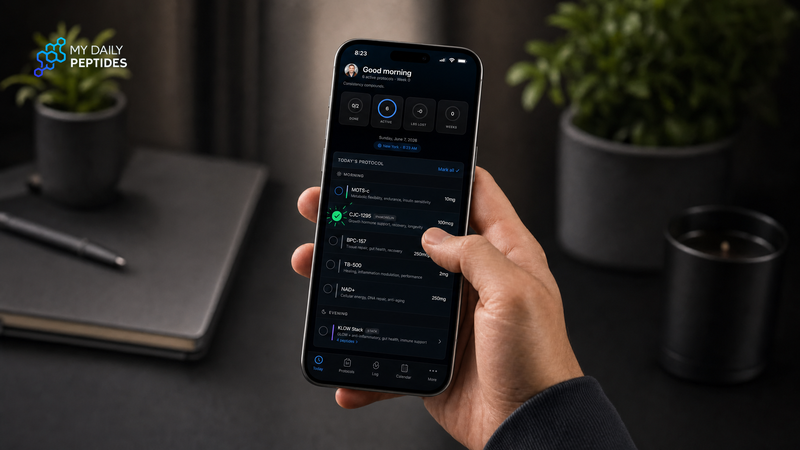
Use our Peptide Tracker to log your daily doses, track your protocols, and monitor your progress over time.